Introduction
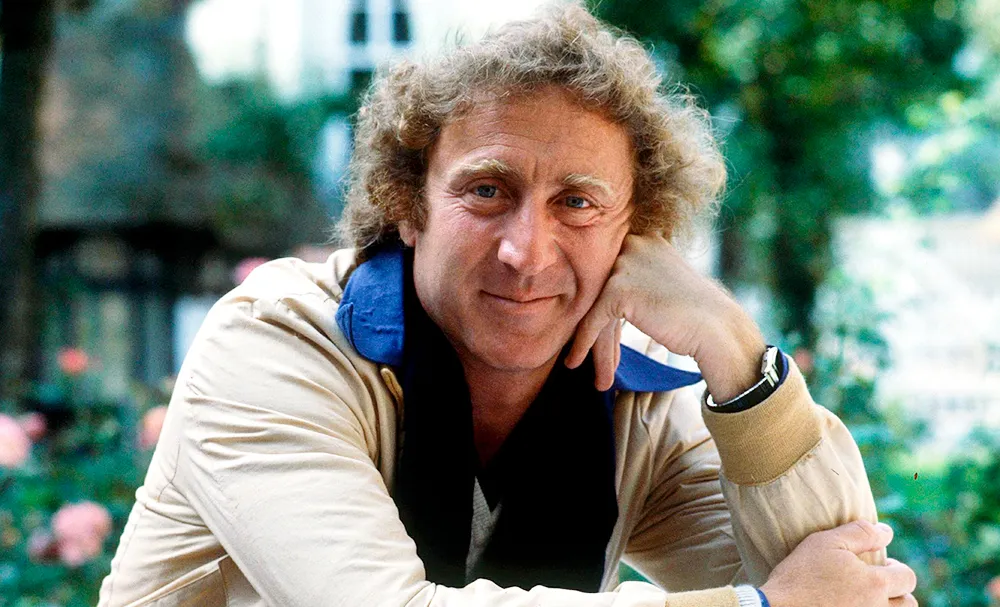
Gene Wilder, one of the most beloved comedic actors in Hollywood history, is celebrated for his remarkable ability to blend eccentricity and heart in his roles. From playing the whimsical yet mysterious Willy Wonka in Willy Wonka & the Chocolate Factory (1971) to his iconic collaborations with Mel Brooks and Richard Pryor, Wilder’s career spanned four decades, leaving an indelible mark on both comedy and drama. This article explores Wilder’s life, career, and legacy, remembering the actor who brought joy and laughter to millions of fans.
Early Life and Education
Gene Wilder, born Jerome Silberman on June 11, 1933, in Milwaukee, Wisconsin, was raised in a middle-class family. His early life was colored by the challenges of his mother’s illness, which sparked his interest in performing. As a young child, he used humor and acting to uplift his family, particularly his mother, who struggled with health issues.
Wilder’s affinity for acting grew during his high school years, and he eventually attended the University of Iowa, where he studied theater. After graduating, he further refined his craft at the Bristol Old Vic Theatre School in England and the Actors Studio in New York. It was at these prestigious institutions that he honed his skills, preparing for his future career in both stage and film.
Early Career and Breakthrough
Gene Wilder’s career began in television and theater, but his breakthrough came with Mel Brooks’ 1967 film The Producers, where he played the role of Leo Bloom, a neurotic accountant. The film, a satirical comedy about two producers trying to stage a Broadway flop, was a critical success and helped Wilder gain national attention. His performance earned him his first Academy Award nomination for Best Supporting Actor.
Following The Producers, Wilder’s film career began to rise, and he continued to take on roles that showcased his unique blend of comedy and drama. His timing, expressive facial features, and ability to create memorable characters soon became his trademark.
Willy Wonka & the Chocolate Factory: A Timeless Performance
Perhaps Gene Wilder’s most iconic role came in 1971 when he was cast as the enigmatic and eccentric Willy Wonka in Willy Wonka & the Chocolate Factory (1971). While the film initially struggled at the box office, it has since become a beloved family classic, with Wilder’s portrayal of Wonka standing out as one of the most memorable performances in cinematic history. His portrayal was a perfect blend of mystery, charm, and underlying darkness, capturing the essence of Roald Dahl’s original character. The line “We are the music makers, and we are the dreamers of dreams” is still often quoted, showcasing the depth Wilder brought to the character.
Collaborations with Mel Brooks
Gene Wilder’s professional relationship with Mel Brooks produced some of the most influential and celebrated comedy films of the 20th century:
Blazing Saddles (1974)
Wilder starred as Jim “The Waco Kid”, a washed-up gunslinger, alongside Cleavon Little. The film, which satirizes racism in the Old West, became a cultural phenomenon and cemented Wilder’s status as a comedy legend.
Young Frankenstein (1974)
In this hilarious parody of classic horror films, Wilder not only starred as Dr. Frederick Frankenstein, but also co-wrote the film with Mel Brooks. The film was a huge success and is regarded as one of the greatest comedy films ever made. Wilder’s performance, filled with comedic physicality and subtle wit, was a highlight of the film’s success.
Collaboration with Richard Pryor
Another defining aspect of Gene Wilder’s career was his collaborations with comedian Richard Pryor. The two first worked together in Silver Streak (1976), followed by Stir Crazy (1980), which became one of their most successful films. Their chemistry was electric, and the pairing of their contrasting comedic styles—Pryor’s sharp wit and Wilder’s quirky expressions—became a fan-favorite formula.
The duo continued to star together in several films, including See No Evil, Hear No Evil (1989) and Another You (1991), solidifying their status as one of the most beloved comedic partnerships in Hollywood.
Later Career and Other Roles
After a string of successes, Gene Wilder shifted focus from starring in comedies to taking on a broader array of roles. He starred in dramas such as The Woman in Red (1984), which was a romantic comedy he also wrote and directed. Wilder’s focus on family life and creative control made him one of Hollywood’s most respected figures behind the scenes.
His later career also saw him taking on television roles, including appearances on “Will & Grace”, for which he won an Emmy Award. Despite stepping back from Hollywood’s spotlight, Wilder continued to contribute to film and television in a way that proved his creative range.
Personal Life: Marriages and Family
Gene Wilder was married four times throughout his life. His first marriage was to actress Mary Mercier (1960–1965), followed by Mary Joan Schutz (1967–1974). His most famous marriage was to comedian and actress Gilda Radner, whom he married in 1984. Radner tragically passed away from ovarian cancer in 1989, deeply affecting Wilder. His subsequent marriage to Karen Boyer (1991–2016) remained until his death. Wilder’s love for Gilda Radner never faded, and he was actively involved in cancer advocacy in her memory.
Gene Wilder’s Death and Legacy
Gene Wilder passed away on August 29, 2016, at the age of 83. His death was attributed to complications from Alzheimer’s disease, which he had privately battled. The public mourned the loss of a comedic genius, with tributes pouring in from around the world. Celebrities like Mel Brooks, Hugh Jackman, and Johnny Depp expressed their admiration for Wilder’s immense contributions to film and comedy.
Despite his passing, Wilder’s films remain as relevant as ever, continuing to entertain and inspire new generations. From his role as Willy Wonka to his memorable collaborations with Richard Pryor and Mel Brooks, Gene Wilder’s legacy in comedy is timeless.
Conclusion
Gene Wilder’s career as an actor, writer, and director is one of immense impact. His films, from Willy Wonka to Blazing Saddles, set the bar for both comedic brilliance and depth of emotion. Wilder’s legacy is carried on through his iconic performances, his invaluable contributions to the film industry, and the profound influence he had on generations of actors and filmmakers.
Whether bringing laughter with his physical comedy or touching hearts with his emotional depth, Wilder’s work will never be forgotten. His timeless appeal continues to make him a household name, celebrated not just as an actor, but as one of the greatest comedians of his time.